Mastering Predictive Maintenance Through Effective Motor Evaluations
Understanding Predictive Maintenance
The Importance of Predictive Maintenance in Electric Motors
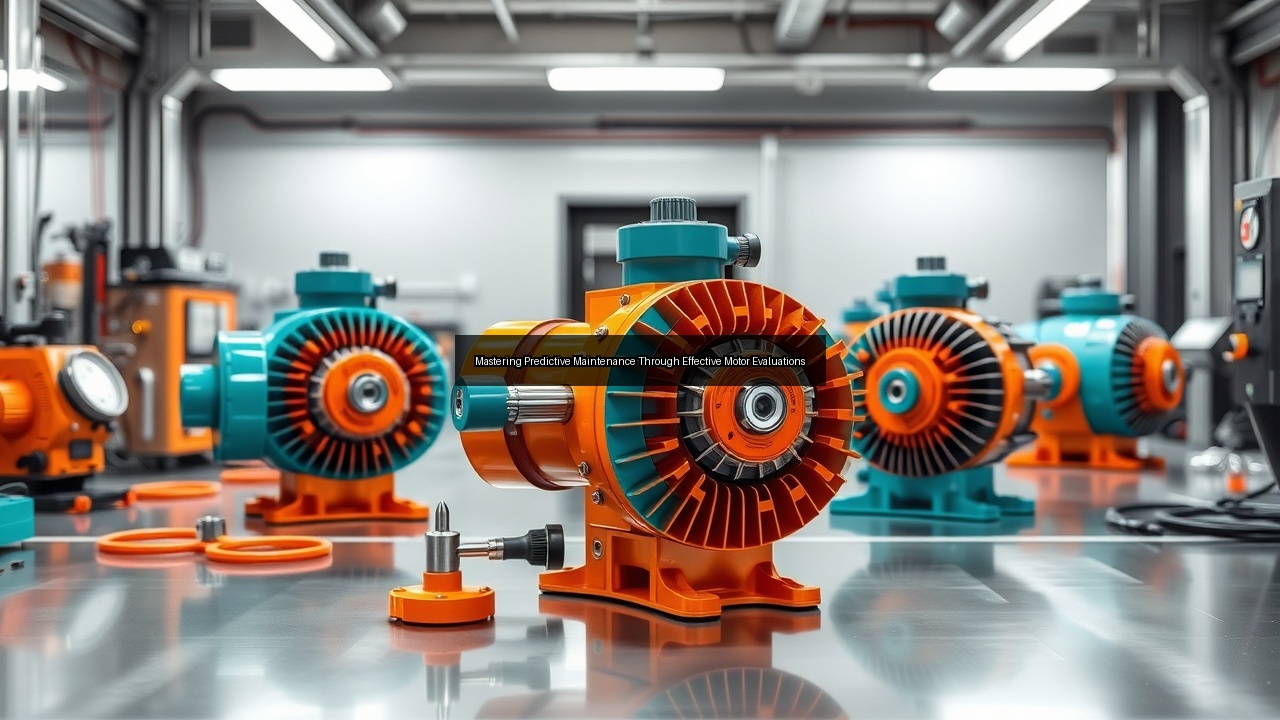
Electric motors power countless industrial systems, from conveyor belts in factories to pumps in water treatment plants. Predictive maintenance transforms how teams manage these vital components by shifting focus from reactive fixes to proactive strategies. Engineers detect potential failures before they disrupt operations, saving time and costs. In electric motors, wear on windings or insulation often leads to breakdowns, but regular evaluations spot issues early. This approach minimizes downtime, extends motor life, and boosts efficiency. For instance, a manufacturing plant using predictive maintenance on its electric motors reduced unplanned outages by 40 percent, according to industry reports. Motor testing plays a central role here, providing data on performance metrics like temperature and vibration. Without it, hidden problems like coil degradation fester, leading to costly repairs or replacements. Predictive maintenance ensures reliability in high-stakes environments, where every minute of operation counts. Teams integrate these practices into daily routines, using tools that analyze real-time data from motors. This not only prevents failures but also optimizes energy use, as inefficient motors draw excess power. Ultimately, mastering predictive maintenance through effective motor evaluations keeps systems running smoothly and competitively.
How Motor Testing Fits Into Predictive Maintenance Strategies
Motor testing anchors predictive maintenance strategies by delivering actionable insights into electric motor health. Technicians perform tests like resistance checks and vibration analysis to baseline normal operations and track deviations. This integration allows for scheduled evaluations that align with production cycles, avoiding unnecessary shutdowns. In a typical strategy, motor testing services scan for anomalies in voltage and current, flagging issues like phase imbalances before they escalate. Data from these tests feeds into broader systems, enabling trends analysis over time. For electric motors in HVAC units or automotive assembly lines, this means predicting failures in bearings or windings months in advance. Industry experts emphasize that consistent motor tests enhance overall system reliability, reducing the risk of cascading failures in connected circuits. Predictive maintenance thrives on this foundation, as testing provides the empirical evidence needed for informed decisions. Teams often combine on-site motor diagnostics with remote monitoring, creating a comprehensive framework. By prioritizing motor testing, organizations achieve cost savings—up to 25 percent in maintenance budgets—and improve safety by preventing electrical hazards. This strategic fit ensures electric motors operate at peak performance, supporting long-term operational goals.
Key Elements of Motor Evaluations
Resistance Measurement and Its Impact on Motor Performance
Resistance measurement stands as a foundational step in motor evaluations, directly influencing electric motor efficiency and reliability. Technicians use multimeters to check resistance across windings, leads, and coils, identifying imbalances that signal trouble. High resistance often points to corrosion or loose connections, which increase heat and reduce torque output. In AC motors, uneven phase resistance can cause vibrations, leading to premature wear. Accurate measurement requires clean contacts and calibrated tools to ensure precise readings. For example, a slight increase in resistance might indicate insulation breakdown, prompting immediate action. This test impacts performance by revealing how well the motor converts electrical energy into mechanical power. Low resistance ensures smooth current flow, optimizing speed and reducing energy loss. In predictive maintenance, tracking resistance trends helps forecast failures, allowing teams to schedule repairs during off-hours. Electric motor testing services often include this as a routine check, especially for high-voltage applications. By addressing resistance issues early, operators prevent overloads that could damage the entire system. Ultimately, mastering resistance measurement enhances motor longevity and operational uptime.
Evaluating Voltage and Current: Understanding Amps and Power Supply
Evaluating voltage and current reveals the heart of electric motor operation, where amps and power supply stability dictate performance. Technicians measure voltage drops across phases to detect imbalances in wye or delta configurations, which can cause overheating in windings. Current analysis, focusing on amps, uncovers overloads or underloads that strain the motor. A power supply irregularity, like fluctuations in AC input, leads to erratic torque and speed variations. Using clamp meters, experts record these values under load to simulate real-world conditions. In motor diagnostics, high amps signal bearing friction or misalignment, while low amps might indicate voltage issues from faulty leads. This evaluation ensures the power supply matches motor ratings, preventing efficiency losses up to 15 percent. Predictive maintenance strategies incorporate regular checks to baseline normal amps and voltage, alerting to deviations early. For battery-powered or gas engine hybrids, current evaluation also assesses charging circuits. By understanding these elements, teams optimize power usage and avoid failures from electrical stress. Effective motor testing in this area safeguards against downtime in critical applications like conveyor systems.
Temperature Analysis: Ensuring Optimal Motor Function
Temperature analysis during motor evaluations pinpoints thermal issues that compromise electric motor function. Infrared thermography and embedded sensors detect hotspots in coils, bearings, or housings, often caused by friction or poor ventilation. Excessive heat accelerates insulation degradation, reducing motor lifespan by half in severe cases. Technicians monitor rise over ambient temperature to ensure it stays within design limits, typically under 40 degrees Celsius for many models. In operation, factors like high ambient conditions or overloads elevate temperatures, leading to efficiency drops and potential failures. Predictive maintenance relies on this analysis to schedule cooling upgrades or lubrication before breakdowns occur. For instance, a motor running 10 degrees above spec might suffer eccentricity in rotors, causing uneven wear. Data from temperature tests integrates with vibration readings for holistic diagnostics. Electric motors in dusty environments demand frequent checks to prevent buildup that insulates heat. By maintaining optimal temperatures, operators achieve consistent torque and speed, minimizing energy waste. This key element of motor testing ensures safe, reliable performance across industries.
Assessing Insulation Integrity for Longevity
Assessing insulation integrity forms a critical pillar of motor evaluations, safeguarding electric motors against electrical failures. Insulation in windings and coils prevents short circuits, but exposure to moisture, heat, or contaminants erodes it over time. Technicians employ megohmmeters to measure insulation resistance, aiming for values above one megohm per kilovolt of rating. Low readings indicate cracks or contamination, risking ground faults or phase-to-phase shorts. In predictive maintenance, periodic tests track degradation trends, allowing timely revarnishing or replacement. For high-speed motors, insulation must withstand torque-induced stresses without breaking down. This assessment extends longevity by identifying issues like partial discharges early. Electric motor testing services often include polarization index tests to differentiate between reversible and permanent damage. Poor insulation leads to arcing, which generates harmonics and further harms the system. By prioritizing this evaluation, teams reduce failure rates by up to 30 percent. Integrating it with temperature analysis provides a fuller picture of motor health, ensuring robust operation in demanding circuits.
Inductance and Its Role in Electric Motor Testing
Inductance measurement uncovers electromagnetic properties essential to electric motor testing, influencing how motors respond to AC signals. In stator windings, inductance affects the magnetic field strength, directly impacting torque and speed control. Deviations from design specs signal issues like turn-to-turn shorts or loose coils, which alter phase balance. Technicians use LCR meters to quantify inductance per phase, comparing against manufacturer data for wye-connected motors. High inductance might indicate air gaps from eccentricity, leading to vibration and noise. In predictive maintenance, monitoring inductance trends helps detect gradual shifts from wear or contamination. This role proves vital in variable frequency drives, where mismatched inductance causes harmonic distortions. Electric motors with high inductance require careful power supply matching to avoid current spikes. By including inductance in evaluations, operators optimize efficiency and prevent overloads in complex systems. Data analysis of inductance complements resistance tests, revealing hidden faults in circuits. Mastering this aspect ensures motors deliver consistent performance without unexpected downtime.
Advanced Techniques in Motor Testing
Using Vibration Analysis for Early Detection of Failures
Vibration analysis serves as an advanced technique in motor testing, enabling early detection of failures in electric motors. Sensors capture oscillations from bearings, misalignment, or rotor imbalances, converting them into frequency spectra for diagnosis. High vibration levels often stem from eccentricity or loose mounts, which erode components over time. Technicians establish baselines during initial motor tests, then monitor deviations to predict issues like impending bearing collapse. In industrial settings, this method identifies problems non-invasively, without disassembly. Predictive maintenance programs integrate vibration data with speed and torque readings for comprehensive insights. For AC motors, resonance from harmonics amplifies vibrations, signaling winding faults. Advanced tools use AI to classify patterns, distinguishing between minor imbalances and severe failures. Electric motor diagnostics benefit immensely, as early intervention cuts repair costs by 50 percent. Teams apply this technique during routine checks, ensuring systems like pumps or fans operate smoothly. By leveraging vibration analysis, operators extend motor life and enhance safety in high-vibration environments.
Signal Analysis: The Role of Harmonics in Motor Diagnostics
Signal analysis delves into harmonics during motor diagnostics, revealing distortions that affect electric motor performance. Harmonics arise from non-linear loads or inverter drives, introducing unwanted frequencies that overheat windings and reduce efficiency. Technicians employ spectrum analyzers to dissect current and voltage waveforms, identifying harmonic orders like the third or fifth. Excessive harmonics indicate issues such as voltage sags or poor grounding in power supplies. In predictive maintenance, tracking harmonic content helps mitigate risks like insulation breakdown. For three-phase motors, unbalanced harmonics point to phase faults or wye connection problems. This analysis integrates with inductance measurements to pinpoint electromagnetic anomalies. Electric motors in variable speed applications suffer most, as harmonics amplify torque pulsations. Data from signal tests guides filter installations or drive adjustments. By addressing harmonics proactively, teams prevent failures and optimize energy use. Advanced motor testing incorporates real-time signal monitoring, ensuring clean power delivery across circuits.
Hipot Testing: Ensuring Electrical Safety in Motors
Hipot testing fortifies electrical safety in motors by verifying insulation withstands high voltages without breakdown. This dielectric strength test applies elevated AC or DC voltage between windings and ground, simulating stress conditions. Passing hipot ensures the motor resists arcing or leaks, crucial for high-voltage electric motors. Technicians ramp voltage gradually, watching for current leaks that signal weak spots in insulation or coils. In predictive maintenance, annual hipot tests detect gradual degradation from heat or contamination. Failures here often trace to manufacturing defects or operational wear, like in gas-filled enclosures. This technique complements megohm tests, providing a more rigorous safety check. For battery-integrated systems, hipot verifies isolation between power circuits. Industry standards mandate hipot for compliance, reducing shock hazards. Electric motor testing services prioritize it for rewound units, ensuring longevity post-repair. By conducting hipot effectively, operators safeguard personnel and equipment in demanding environments.
Data-Driven Approaches to Motor Evaluations
Leveraging Software for Enhanced Motor Testing
Leveraging software elevates motor testing by automating data collection and analysis for electric motors. Specialized platforms integrate with sensors to log metrics like voltage, current, and vibration in real-time. This enhances accuracy, as manual methods often miss subtle trends. In predictive maintenance, software dashboards visualize motor health, alerting to anomalies in amps or temperature. For instance, algorithms detect harmonic patterns in signal data, flagging potential failures. Electric motor evaluation benefits from cloud-based tools that store historical records, enabling trend comparisons across fleets. Troubleshooting becomes faster with diagnostic modules that suggest root causes based on inductance or resistance readings. Teams customize software for specific applications, like monitoring torque in high-speed drives. Integration with IoT devices allows remote motor tests, reducing on-site visits. This data-driven approach cuts diagnostic time by 60 percent, per user reports. By adopting such software, organizations streamline motor analysis and boost system reliability.
Data Analysis Techniques for Predictive Maintenance
Data analysis techniques power predictive maintenance by transforming raw motor testing data into foresight. Statistical methods like regression models predict failure timelines from trends in resistance and vibration. Machine learning classifies patterns in current waveforms, identifying early signs of insulation wear. In electric motors, Fourier transforms break down signals to isolate harmonics affecting performance. Technicians apply threshold analysis to set alerts for deviations in voltage or temperature. Big data tools aggregate info from multiple motors, revealing systemic issues like power supply fluctuations. Predictive models incorporate speed and torque data to forecast efficiency losses. For wye-configured systems, phase analysis uncovers imbalances hidden in aggregate readings. This approach enables proactive interventions, extending motor life beyond traditional schedules. Electric motor diagnostics evolve with AI, processing vast datasets for nuanced insights. By mastering these techniques, teams minimize downtime and optimize resource allocation.
Integrating Observation and Measurement for Accurate Diagnostics
Integrating observation and measurement yields accurate diagnostics in motor evaluations, combining human insight with quantitative data. Visual inspections spot external issues like corrosion on leads or unusual noises during operation, while measurements quantify internal problems such as inductance shifts. This synergy ensures comprehensive electric motor analysis, as observations guide targeted tests. For example, noting speed variations prompts current and voltage checks for phase faults. In predictive maintenance, field technicians document observations alongside sensor data, creating rich datasets for software review. Vibration readings paired with auditory cues reveal bearing wear early. This method addresses related searches like motor diagnostics by providing holistic views. Electric motors in noisy environments benefit from structured logs that correlate symptoms with metrics like temperature rise. Troubleshooting accelerates when observations highlight measurement anomalies, such as unexpected amps spikes. By blending these elements, operators achieve precise failure predictions and effective remediation.
Troubleshooting and Remediation Strategies
Identifying Common Motor Failures through Testing
Identifying common motor failures through testing prevents minor issues from escalating in electric motors. Overheating tops the list, detected via temperature analysis showing excessive rises from overloaded windings. Bearing failures emerge in vibration tests as high-frequency peaks, often due to lubrication gaps. Insulation breakdowns appear in low resistance or hipot failures, stemming from moisture ingress. Winding shorts manifest as current imbalances, reducing torque and speed. Predictive maintenance uses motor tests to spot these early, like phase unbalance in AC circuits. Eccentricity causes uneven magnetic fields, flagged by inductance variations. Harmonic distortions in signals indicate drive incompatibilities. Electric motor testing services routinely check for loose connections via resistance measurements. Common culprits include contaminated coils or faulty power supplies. By systematically testing, teams isolate failures, enabling targeted fixes that restore efficiency and safety.
The Role of Design in Preventative Measures
Design plays a pivotal role in preventative measures for electric motors, influencing long-term reliability. Engineers incorporate robust insulation and cooling paths from the outset, reducing failure risks in high-temperature environments. Modular windings allow easier repairs, minimizing downtime during troubleshooting. Balanced phase designs in wye systems prevent harmonic buildup, enhancing signal integrity. Material choices, like high-grade coils resistant to vibration, extend service life. Predictive maintenance amplifies good design by aligning tests with inherent strengths, such as monitoring torque limits. For variable speed motors, scalable inductance supports diverse loads without stress. Design flaws, like inadequate lead sizing, cause voltage drops—addressed through upfront simulations. Integrating sensors during design enables seamless data collection for analysis. This proactive stance cuts remediation needs by 35 percent. Electric motor evaluations confirm design efficacy, ensuring systems withstand operational demands.
Effective Troubleshooting Techniques for Electric Motors
Effective troubleshooting techniques for electric motors combine systematic testing with swift action to resolve issues. Start with visual observation for obvious damage, then proceed to resistance and voltage measurements to isolate electrical faults. For mechanical problems, vibration analysis pinpoints bearing or alignment issues. Current logging under load reveals overloads or imbalances in amps. In predictive maintenance, historical data guides prioritization, like focusing on recurrent harmonic problems. Hipot testing confirms insulation after suspected arcing. Software aids by simulating scenarios based on inductance and temperature data. Teams use isolation methods, disconnecting phases to test individually in wye setups. Common techniques include megger tests for ground faults and oscilloscope for signal waveforms. Post-troubleshooting, retesting verifies fixes, ensuring torque and speed normalize. This structured approach, applied by motor testing services, restores operations efficiently while preventing recurrences.
See Also
- The Essential Guide to Testing Electric Motors for Maximum Efficiency
- Examining Coil Windings and Their Influence on Motor Performance
- Top Troubleshooting Techniques for Electric Motor Testing
- Harnessing Data Analysis for Superior Motor Diagnostics
- Innovative Software Solutions for Streamlined Motor Testing Processes